AI search replaces ten blue links with one synthesized answer — generated by ChatGPT, Perplexity, Google AI Overviews, Gemini, or Bing Copilot. Understanding how AI search works is the first step to appearing in it.
AI search is a category of information retrieval technology that generates synthesized, conversational answers to queries rather than returning a list of ranked links. Traditional search engines — Google, Bing, Yahoo — have operated since the 1990s on a fundamentally consistent principle: receive a query, scan an index of web pages, score each page by relevance signals, and return an ordered list of links. The user clicks through, reads various pages, and synthesizes the answer themselves.
AI search replaces that process entirely. When a user submits a query to ChatGPT Search, Perplexity, or Google AI Overviews, the AI system reads multiple web sources simultaneously, processes their content through a large language model, synthesizes the information into a coherent, conversational response, and presents that response directly to the user — typically citing two to five reference sources. The user reads one answer instead of visiting ten websites.
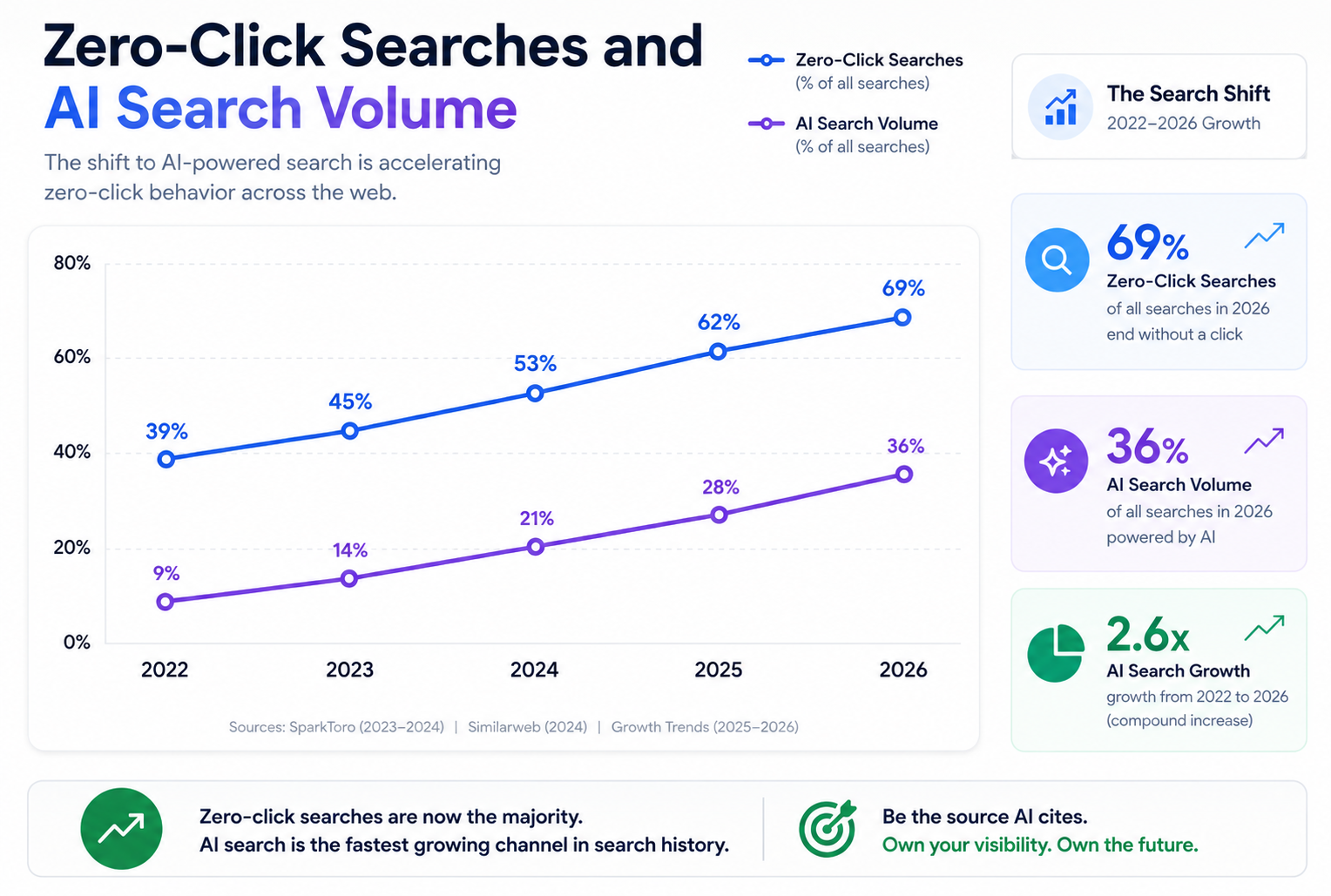
This shift is structural, not incremental. It is not that search results have gotten better or that ranking #1 is more competitive. The paradigm itself has changed. A significant and growing proportion of information queries are resolved without the user visiting any website at all — the AI answers the question and the interaction ends. For businesses, this means the metric of "ranking #1" has become incomplete: a business can rank #1 and still be invisible to users whose query is answered by the AI Overview above the organic results.
The major AI search platforms each work somewhat differently. Google AI Overviews are integrated directly into Google Search results and appear above all organic rankings for eligible queries. ChatGPT Search is a separate search mode within ChatGPT that queries the live web and synthesizes answers. Perplexity AI is a standalone AI search engine with its own index and citation style. Gemini is Google's conversational AI with web search integration. Bing Copilot integrates AI synthesis into Microsoft's search engine.
Despite their differences, all AI search systems share common source selection criteria: content extractability (can the AI parse a direct answer?), source authority (is this a credible source in the relevant domain?), content freshness (is this information current?), and coverage relevance (does this content directly address the query?). Optimizing for these signals is the core practice of GEO and AEO.
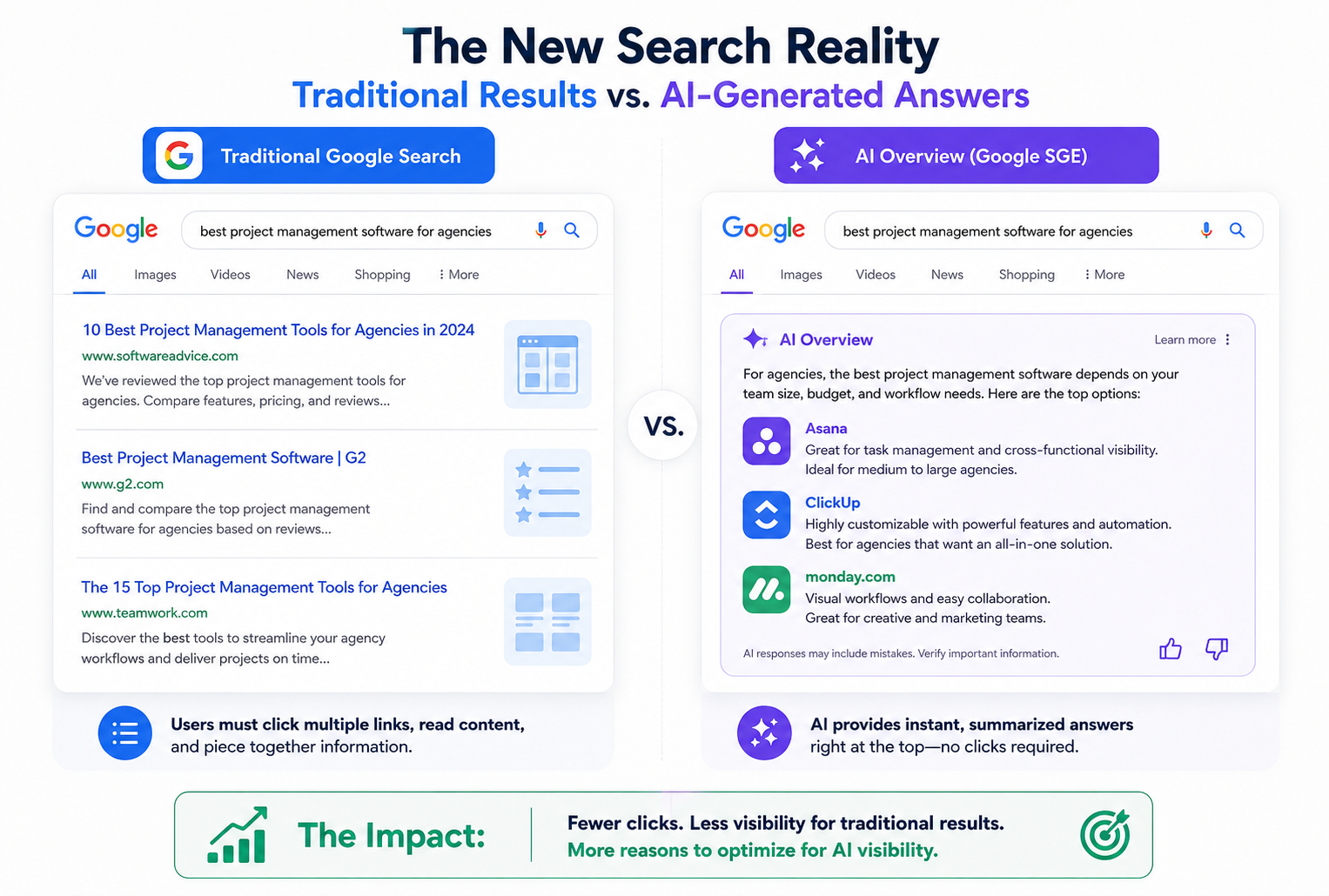
Traditional search returns a list. AI search writes an answer. This is not a cosmetic difference — it changes how buyers consume information, which businesses receive visibility, and what optimization strategies produce results.
In traditional search, ten businesses share a results page. Every business ranked on page one receives some exposure. In AI search, one to five sources are cited in a single AI-generated paragraph. The citation is zero-sum: if your competitor is cited, you are not. The stakes for appearing in AI search are significantly higher than appearing in traditional search results.
AI search also changes the buyer's journey. A user who asks ChatGPT "what's the best logistics software for small businesses" and receives a complete, cited answer has already formed a vendor shortlist before visiting any website. Businesses cited in that answer begin the sales conversation at a different level of trust than businesses the buyer discovers later through organic search.
When your buyer searches on Perplexity or asks ChatGPT a question in your category, they see a single AI-generated answer with two to five cited sources. That is your competitive landscape in AI search — not the ten blue links on a Google results page, but the five citations in an AI answer.
On mobile, this reality is even more concentrated. Google AI Overviews consume most of the above-fold space before any organic result appears. Users on phones frequently get their answer from the AI Overview and never scroll to organic results at all.
AI search optimization ensures your brand is one of those two to five citations — on desktop through ChatGPT and Perplexity, and on mobile through Google AI Overviews and Gemini.
Traditional SEO is not dead — it still drives 53% of all web traffic. But it is no longer sufficient as a standalone strategy. A business that invests exclusively in SEO is optimizing for a shrinking share of the information-seeking behavior of its buyers.
61% of searches now end without a click. Every zero-click search is a moment where a buyer's question was answered without visiting any website. In every one of those moments, either your brand was cited in the AI answer or it wasn't. Traditional SEO has no mechanism for being present in zero-click searches — only AI search optimization (GEO and AEO) creates that visibility.
The businesses that will dominate search visibility in 2027 and beyond are the ones running SEO, GEO, and AEO simultaneously — maximizing visibility across both the traditional link layer and the AI answer layer of modern search.
ChatGPT, Perplexity, and Google AI Overviews are answering your buyers' questions right now. The businesses being cited are building authority that compounds. Start building yours today.
What our clients say